
Productions in Los Angeles shoot in real houses all year round, and the houses they come to us for are the ones they cannot find anywhere else. This is a guide for owners of those houses: estates with grounds, architectural landmarks, period houses with real character, and one-of-a-kind properties. A clean, well-kept house is already listed by the thousand on peer-to-peer platforms, and productions can find it there. What they come to us for is the house a location manager cannot find on a platform. Here is what qualifies, what a shoot day does to a house, and how listing your property with Image Locations works.
Which Houses We Represent: Estates, Landmarks and One-of-a-Kind Places

A house has to give a production something it cannot get from an ordinary home, and it usually comes in one of four forms.
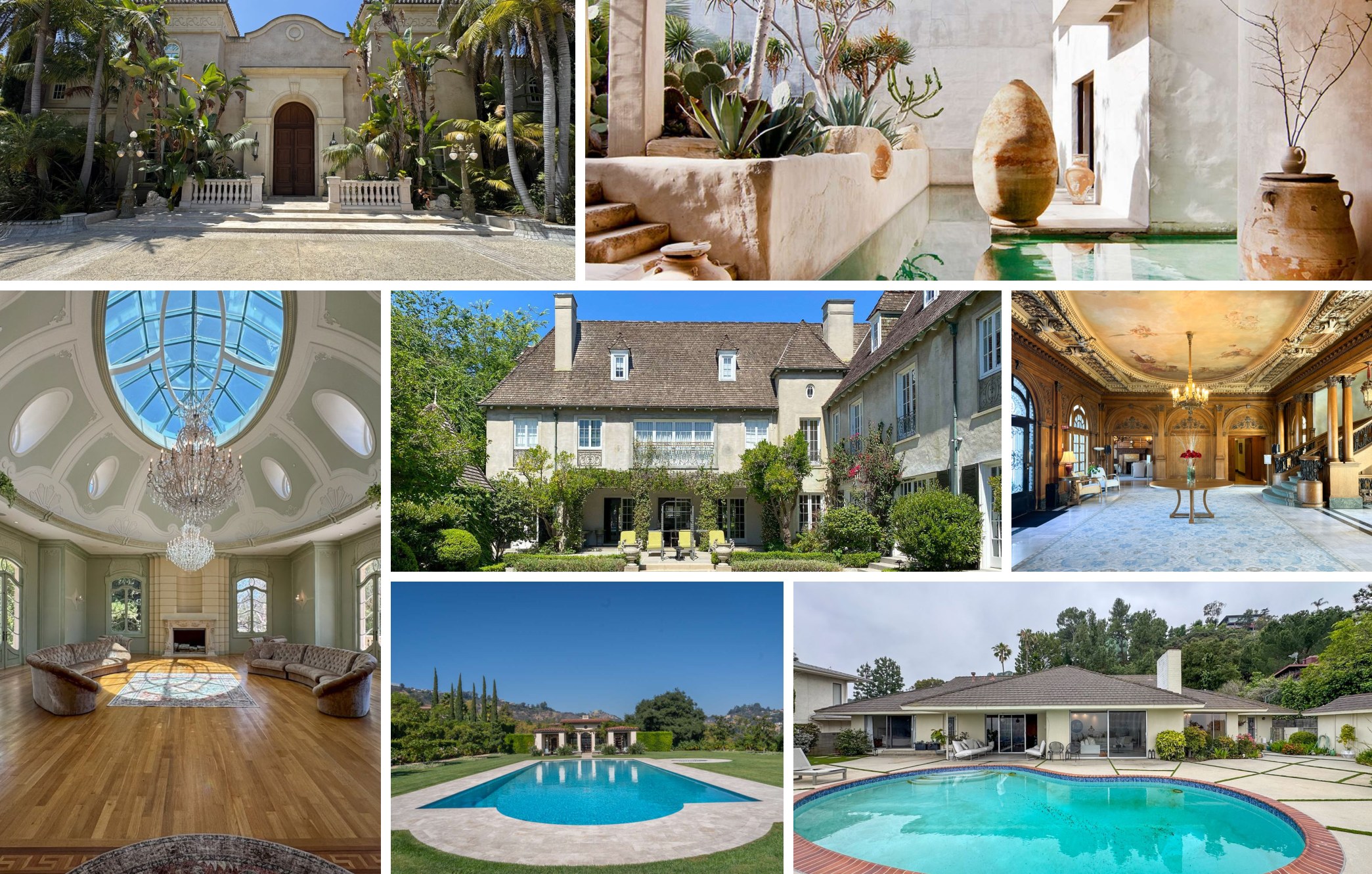
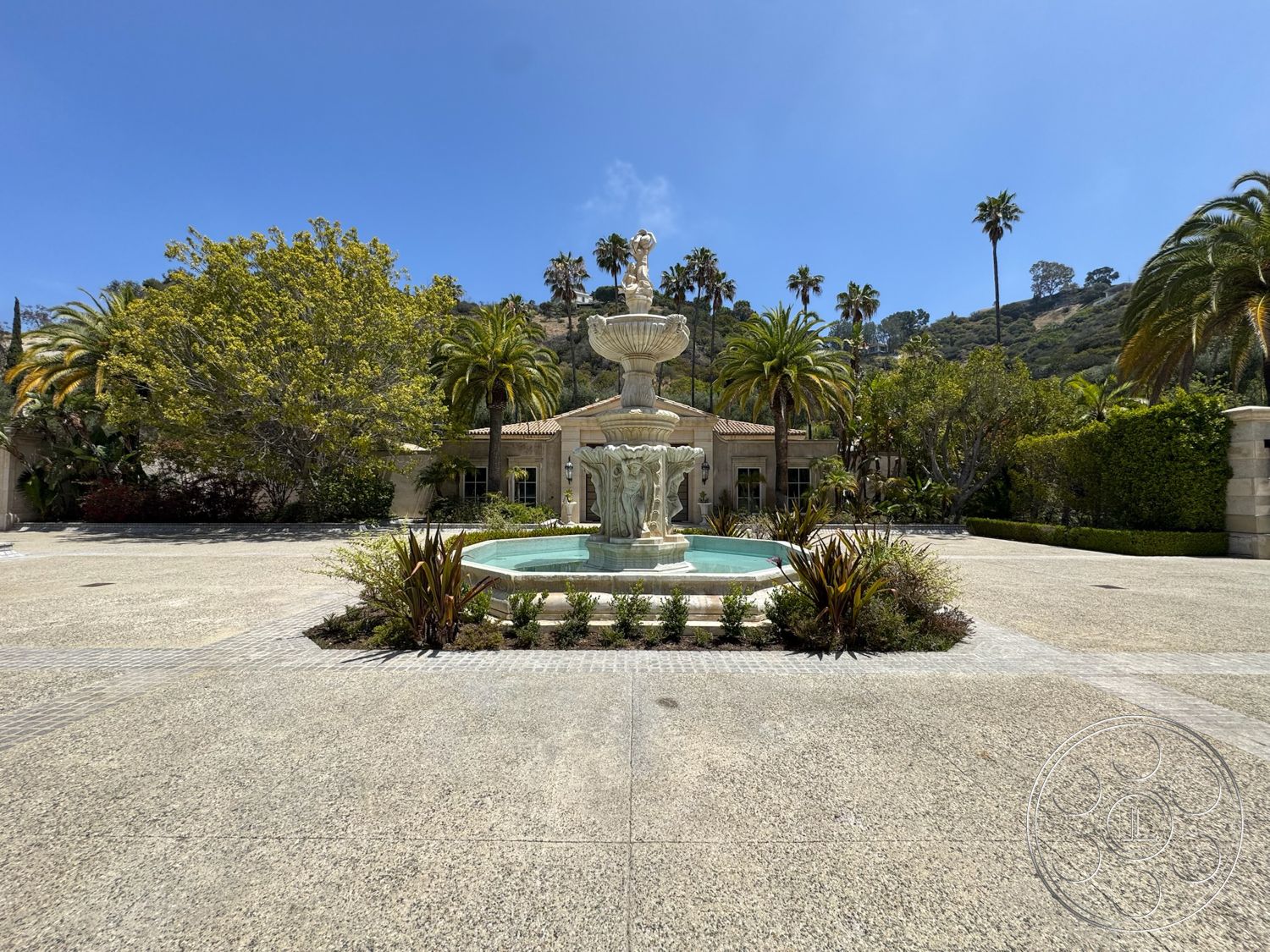
Scale and grounds. Beverly Compound in Beverly Hills arrives through a gated approach into a circular forecourt around a tiered stone fountain, with separate lanes for arrival and departure moves, then opens onto broad lawns, terraces, a private cinema, a sports court and an open-span outbuilding, distinct looks within one property. Lakeside Mansion runs its pool through a broad lawn toward a columned pavilion, with a cypress alley, a rock garden and a lake edge with a dock beyond.
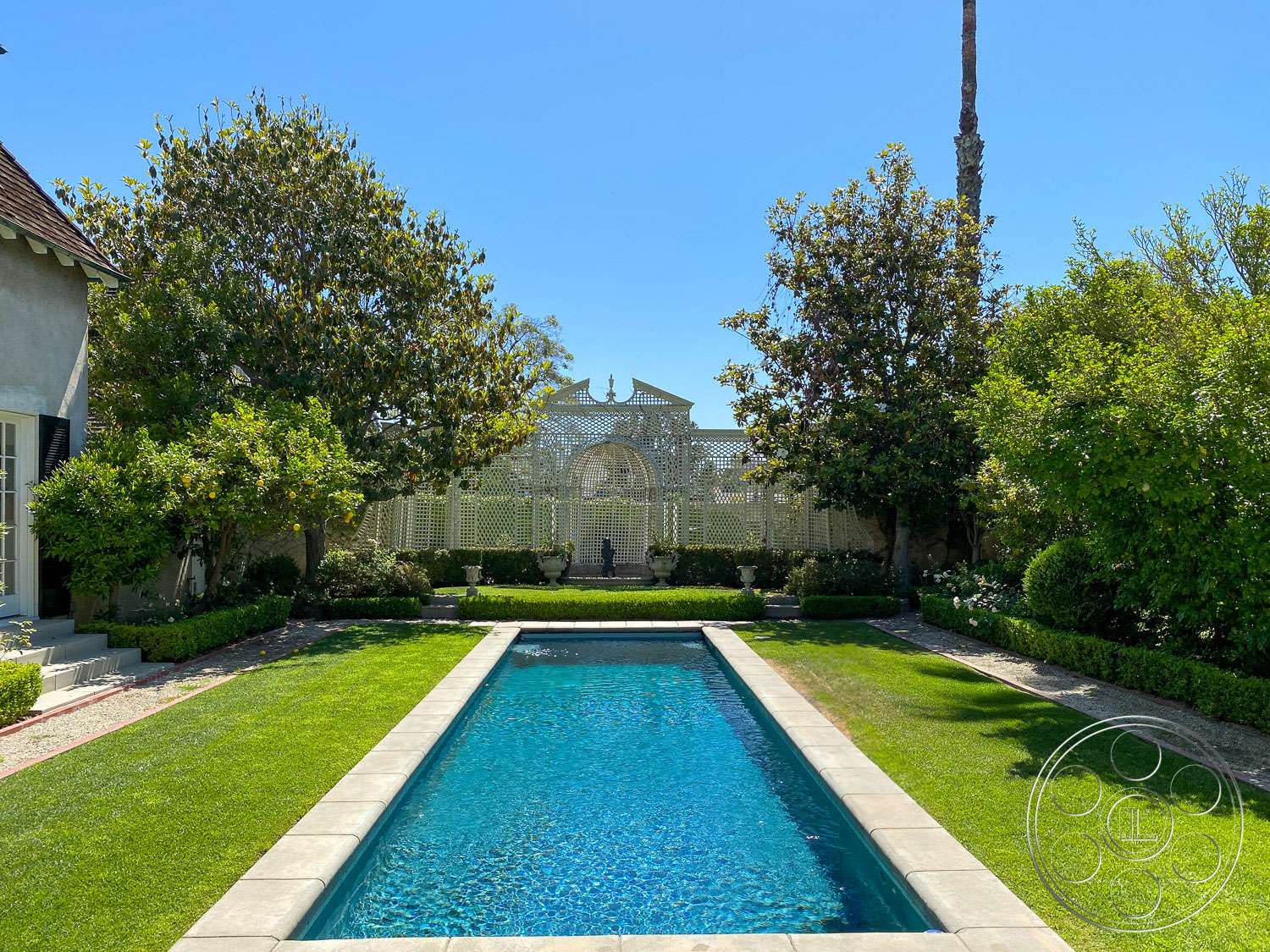
Architectural distinction, at any age. The design carries the frame on its own. Tiffany Estate is a French chateau-inspired house built around ceremonial scale: a skylit oval ballroom under a tall dome with two crystal chandeliers, a marble foyer with a sweeping split staircase, and formal rooms in parquet and carved paneling. The French Chateau in Hancock Park carries the same formality at residential scale, from a checkered stone foyer to a long rectangular pool and clipped gardens. Houses like these anchor our mansion filming locations, and productions take them as they are, with very little scenic help.
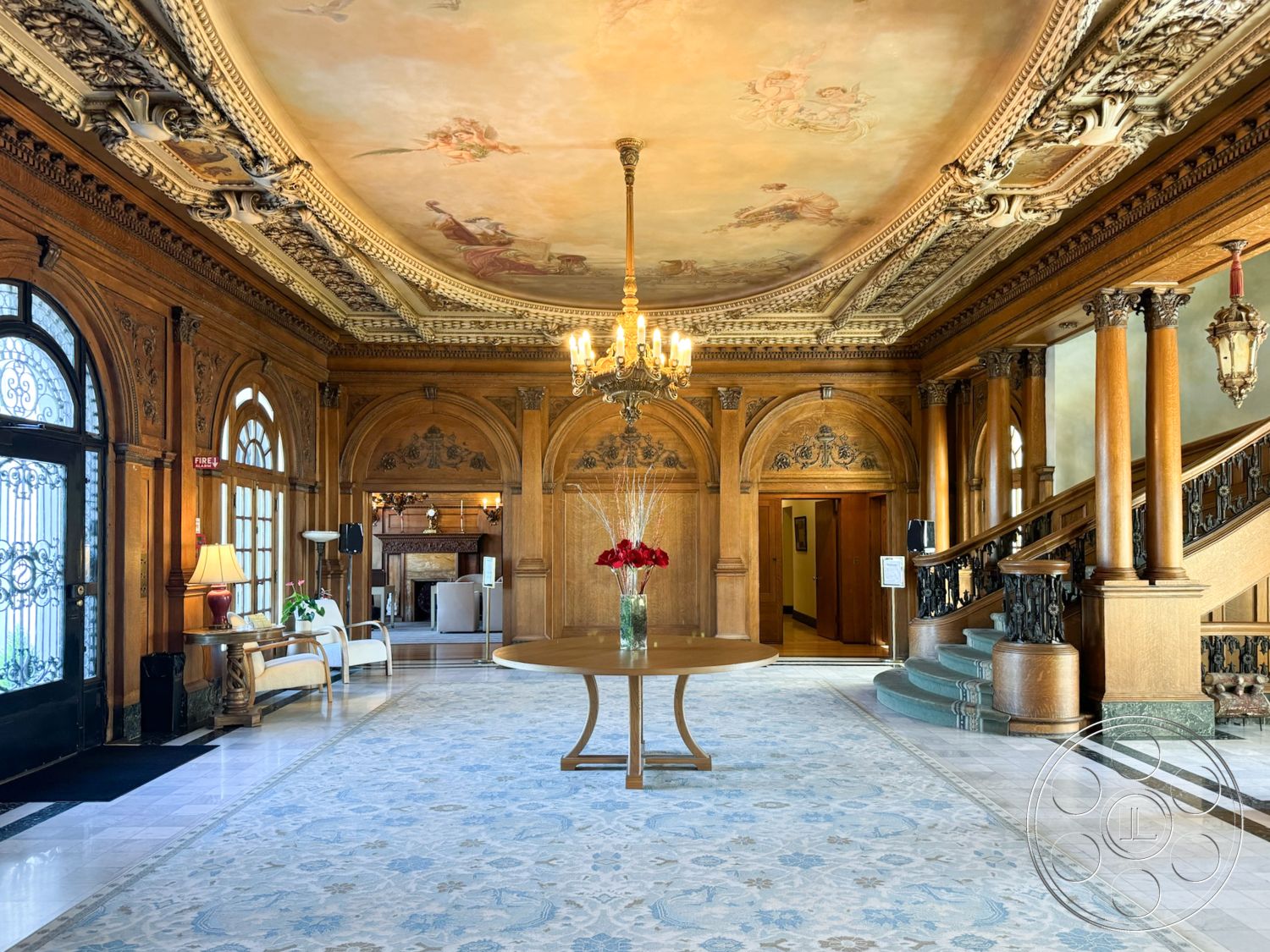
Period character with real age, at any scale. Here the age carries the frame. Adams Mansion in West Adams is a Beaux-Arts house whose ballroom has a painted ceiling, deeply modeled plasterwork and honey-toned paneling with enough age in the carved wood and stonework to read as a real period environment rather than a set. At the other end of the scale, Once Upon Hollywood in Studio City is a single-story mid-century ranch, not an estate, but its hilltop freeform pool with valley views, terrazzo den and wood paneling are the real thing. It sits in our Americana filming locations for that reason.
Built as one person's vision. The Oasis in Venice, the Moroccan compound the fashion photographer Philip Dixon built around a pool court and a cactus garden, has carried magazine covers and campaigns for decades. We wrote about it in the Oasis spotlight.
Productions search by look: the chateau, the Mediterranean estate, the Beaux-Arts hall, the mid-century ranch. We place a house faster when its look has a name. What does not fit is a house whose only feature is that it is nice. Productions can find those on a platform without calling anyone. What we look for is the feature a scout would build a day around.
What Makes a House Work on the Day: Light, Room and Parking
Once a house clears that bar, three practical things matter most: light, room to work, and parking. A small stills crew and a full company are both routine here, and both ask the same questions.
Light means windows on more than one side and rooms that stay usable as the sun moves. Room to work means a principal room where the furniture can sit away from the walls and leave a lane for the camera, and interiors with a controlled option for when the exterior light is too strong. Parking is the thing owners underestimate most often. A gated forecourt, a motor court or a broad drive with room to stage is a production asset. A hillside house with street parking still books, but the crew shuttles in from a nearby basecamp arranged through the permit.
What a Shoot Day Involves
Trucks arrive before the first shot. Equipment comes in through whichever door the scout agreed on, and one or two rooms become the working set while another becomes holding for cast and crew. A stills day might be a photographer, an assistant, a stylist and a client in one bright room. A commercial or a television day fills the house and the drive with people, cable and stands, and runs from early morning to evening.
Residential neighborhoods carry permit conditions on hours, parking and noise, and owners set their own house rules for crew count and which rooms are open. Those conditions are walked through before anyone commits and written into the booking, not negotiated on the day.
Insurance, Permits, and Protecting Your Property
Three things protect an owner, and professional productions expect all three. First, insurance. Productions carry general liability insurance and provide a certificate naming the property owner as additionally insured. Second, the permit. Filming in the City of Los Angeles runs through FilmLA, and independent cities such as Beverly Hills, Pasadena and Santa Monica run their own film offices. The production obtains the permit, not the owner. The Pull My Permit button on the site reaches the permit expert we refer productions to, and the permit carries the conditions on hours and parking that the neighbors care about. Third, the agreement. We handle the booking, the agreements and the owner relationship, so the fee, the hours, the rooms in play and the house rules are settled in writing before anyone unloads a truck.
On the fee itself, we do not publish rate cards, because a number that covers every house in the city would be fiction. Price follows four things: the property, the size of the production's footprint, the hours, and what the shoot asks of the owner. A small stills crew and a full company at the same address are different transactions, and we quote each booking for the actual shoot.
How to Register Your House for Filming and List It with Image Locations
Registering your house for filming with us starts with a short form at List Your Property. It asks for your contact details and the address, whether you are the property owner, the manager or something else, whether the house is listed on another platform such as Airbnb or Peerspace, whether it is currently for sale, which uses you want to be considered for, from still photography to television and motion pictures, and which of our services you want the house listed with. Attach four to eight photographs, JPG or PNG. They do not need to be professional. What we need to see is the thing that makes the house exceptional, the main rooms, the light and the approach.
Every submission is reviewed, and we are selective, because the library is what productions come to us for. We have represented film and photography properties in Los Angeles for more than fifteen years. If we agree to represent the property, we contact you with a representation agreement, and one of our staff photographers may take additional photographs for the listing gallery. From there your house sits in the library beside the properties above, and our agents present it to the productions whose brief it fits.
If your house has that one thing no other house has, list your house as a film location and we will take a look.
